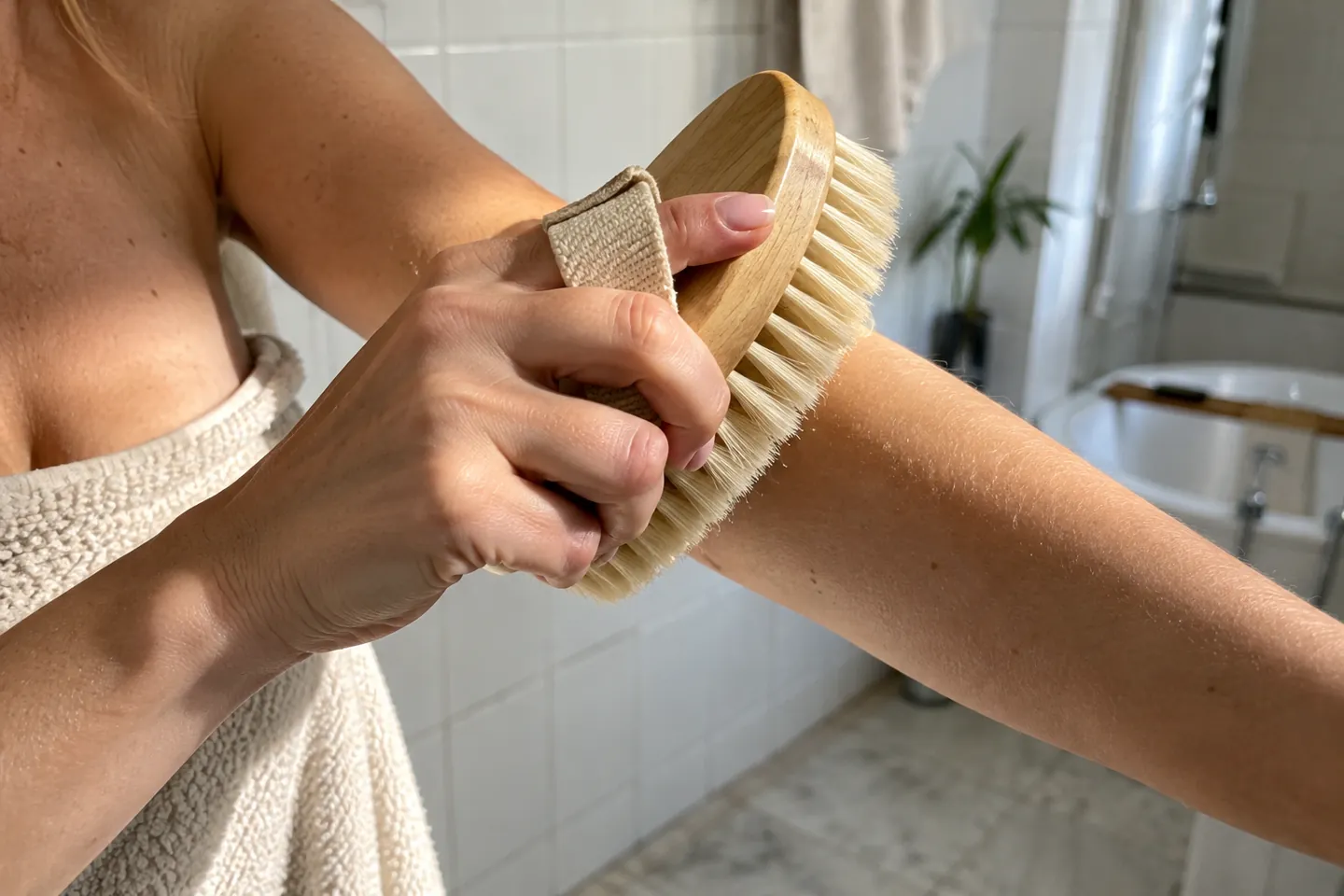
What dry brushing does
A natural bristle brush lifts loose dead skin cells from the surface and gives a light mechanical exfoliation. Afterwards the skin feels smoother and looks more even for a few hours, and the moisturiser you apply goes on more evenly.
The stronger claims that circulate online, including detox and the removal of cellulite, are not supported by good evidence. Brushing does stimulate the skin and some people find it energising, which is a fair reason to do it. It just does not reach into the tissues beneath.
The method in ten minutes
Start with dry skin, before the shower. Use a brush with firm natural bristles and a handle long enough to reach your back. Brush with light to moderate pressure in long strokes toward the heart: from ankles to thighs, from hands to shoulders, and in circles on the stomach in a clockwise motion. Keep each area to about ten strokes and do not go over the same patch again and again.
Shower with lukewarm water afterwards, then apply a fragrance-free moisturiser or body oil while the skin is still slightly damp. Feeling pinkness on the skin for ten or fifteen minutes is normal. Burning, stinging or a rash is not.
How often, and which areas to avoid
Three to four times a week is enough for most skin. Daily brushing can irritate people with sensitive skin and create dryness when combined with a hot shower.
Do not brush over sunburn, eczema, psoriasis flares, varicose veins, broken skin, fresh shaving cuts, rashes or any moles. Keep the brush away from the face and the genital area, and skip the armpits if the skin is sensitive there.
Choosing a brush
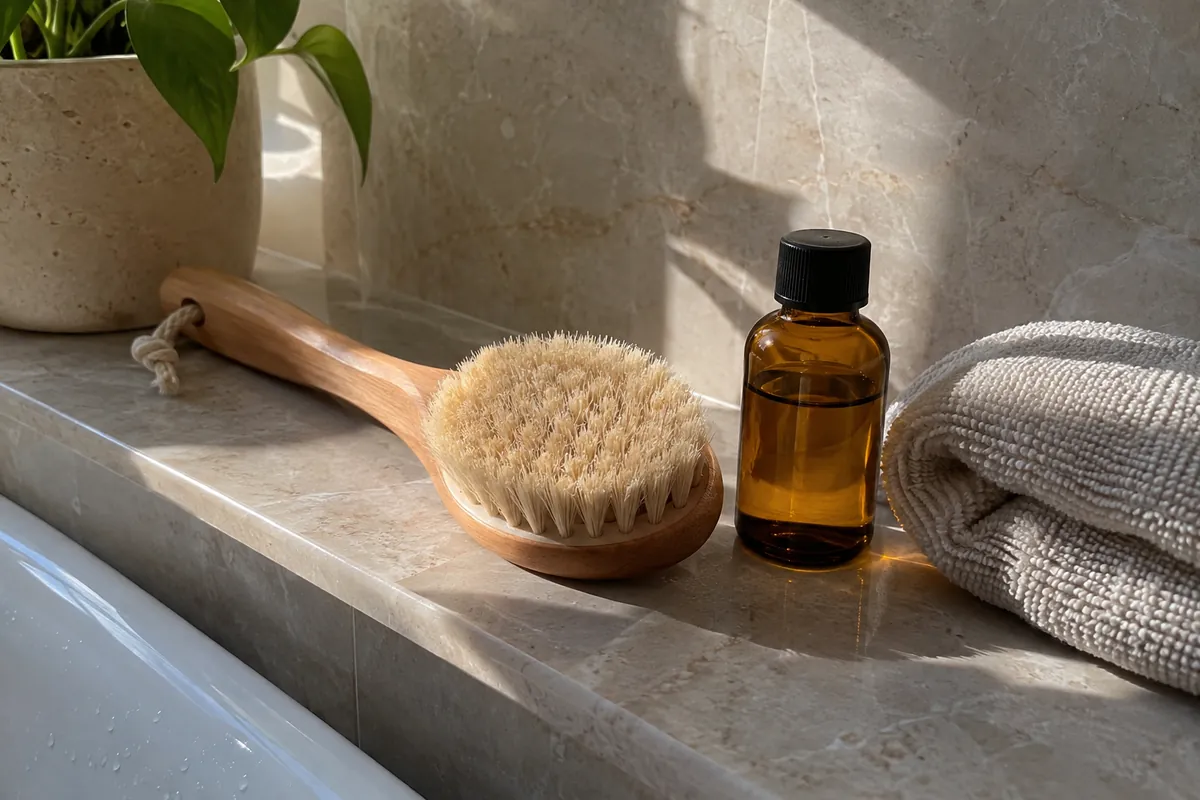
Look for a brush with natural bristles that feel firm but not stiff. Synthetic brushes can work, though they often feel harsher. A handle makes it easier to reach the back, and a brush you can wash weekly with warm water and mild soap will stay hygienic. Replace it when the bristles flatten or start to shed.
Before your first ten-minute session
0 of 6 done
Questions people ask
Does dry brushing reduce cellulite?
The evidence does not show a lasting change in cellulite. Brushing can make skin look smoother for a short time, which is the honest expectation.
Should I dry brush before or after a shower?
Before. Dry skin is easier to exfoliate, and the shower rinses away the loosened cells.
Can dry brushing help with ingrown hairs?
It may help some people by removing surface cells, but do not brush over an active ingrown hair or an inflamed area.